Thursday, November 19th, 2026
November Nosh: 5 Little-known Facts About Black Paris
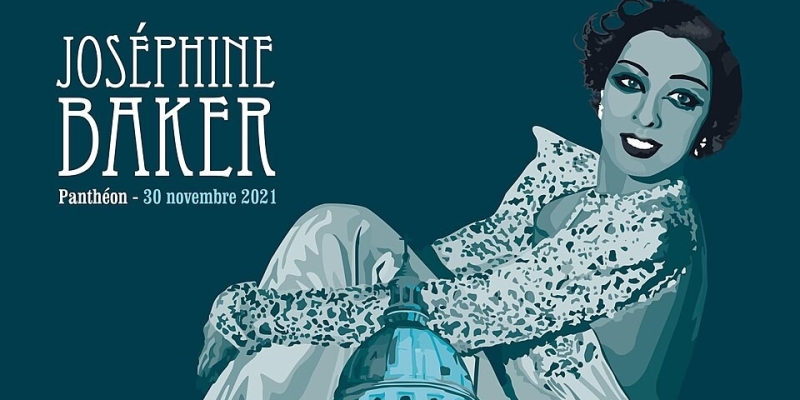
Cover image: Illustration of Josephine Baker's Induction into the Pantheon (detail)
Source: Wikimedia Commons
CC-BY-SA-3.0
November in Paris means cooler days, golden leaves, chestnuts roasting on street corners—and, if you know where to look, some fascinating connections to Black history.
Today, Entrée to Black Paris is serving up five little-known facts connecting November to some of the people, places, and stories that make up Black Paris.
James Baldwin arrived in Paris
James Baldwin was only 24 years old when he set sail for Paris on November 11, 1948.
An ambitious young writer, he arrived in the city a few days later, looking for distance from the United States and the freedom to figure out his life and his work.
Paris became the first of many homes abroad for Baldwin, giving him breathing room to explore his thoughts and experiences relative to race, sexuality, religion—indeed, his entire identity.
His years in France were critical in shaping the literary artist and human being he would become.
_1st_edition_front_cover_public domain_Wikimedia Commons.jpg) Book jacket for Notes of a Native Son (1955)
Photo of James Baldwin by Paula Horn
Image in the public domain
Miles Davis performed at the Olympia Theater
In November 1957, Miles Davis returned to Paris to perform in what turned out to be a sold-out concert at the Olympia Theater on November 30. He traveled solo and was accompanied by musicians already working at the Olympia—pianist René Urtreger, bassist Pierre Michelot, tenor saxophonist Barney Wilen, and American expatriate drummer Kenny Clarke.
Davis arrived the day of the show; the entire performance was unrehearsed!
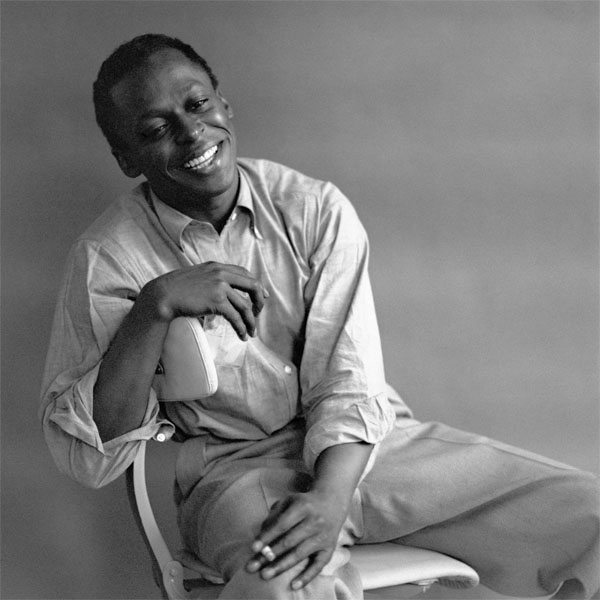
Miles Davis by Tom Palumbo
Source: Wikimedia Commons
CC-BY-SA-2.0
Subsequent to this event, Davis began a musical residency at the Club Saint-Germain. It was here that film director Louis Malle approached him about recording the soundtrack for Ascenseur pour l'echafaud. Those recording sessions took place at the club on December 4 and 5, producing what remains one of the most celebrated examples of jazz meeting European cinema.
Listen to the entire November 30, 1957 concert on YouTube HERE.
Richard Wright died in Paris
Richard Wright died in Paris on November 28, 1960, at the age of 52.
Author of Native Son and Black Boy, Wright first moved to Paris in 1946 and became an important figure among the French existentialists as well as the city's community of Black American writers and intellectuals. Captivated by the atmosphere he encountered there, he moved his family to the city permanently in 1947 and spent the rest of his short life there.
He is buried in Père-Lachaise Cemetery, making one of Paris's most famous landmarks the final resting place of one of America's most influential writers.
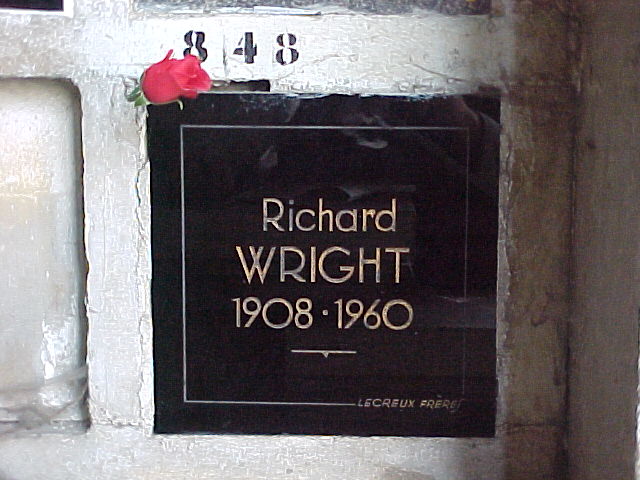 Richard Wright niche at Père Lachaise Cemetery
© Entrée to Black Paris
Josephine Baker entered the Panthéon
On November 30, 2021, Josephine Baker became the first Black woman inducted into France's Pantheon.
Born in St. Louis, Baker came to Paris in 1925 and became an international star. But her contribution to France went far beyond the stage.
During World War II, she worked for the French Resistance and used her celebrity and international mobility to assist the Allied cause.
She was also an outspoken opponent of racism and segregation and participated in the U.S. civil rights movement.
Her Pantheon ceremony recognized not only an extraordinary performer, but also a woman whose life became deeply connected to French history.
 Joséphine Baker au Panthéon
Illustration de JipéDan, 30 novembre 2021
Source: Wikimedia Commons
CC-BY-SA-3.0
African soldiers fought during World War I
Every November 11, France commemorates the Armistice of 1918 and remembers the millions of people affected by World War I.
A Black Paris perspective encourages us to remember a particular group of people that is often forgotten in this context.
Thousands of African soldiers served in the French armed forces during the First World War. Among the best-known were the tirailleurs sénégalais.
Despite their name, these troops were recruited from across French West and Equatorial Africa, not only from Senegal.
,_le_14_juillet_1913_public domain.png) Flag of the 1st Regiment of the Tirailleurs Sénégalais at Longchamp, Paris
July 14, 1913
Photo by Maurice-Louis Branger
Image in the public domain
The above image was taken on Bastille Day 1913 during the annual military review at the Hippodrome de Longchamp in Paris. It captures the color guard (garde au drapeau) of the 1st Regiment of Tirailleurs Sénégalais, just over a year before the outbreak of World War I.
During a special ceremony, French President Raymond Poincaré formally decorated the regiment with the Legion of Honor in recognition of their decades of service in French colonial campaigns.
Each of the soldiers in the foreground wears multiple campaign medals on his chest, indicating they were seasoned veterans of France's pre-1914 colonial wars.
The 1st Regiment went on to serve extensively during WWI. Its battalions suffered severe casualties in some of the most important and brutal campaigns of the war.
